
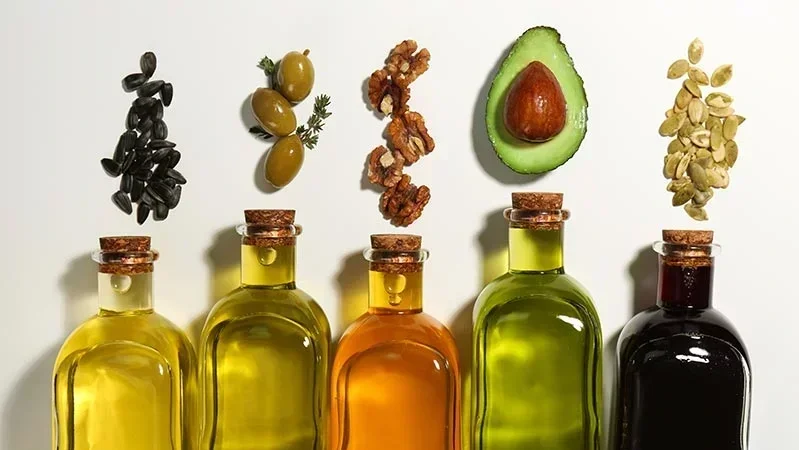
Chatter about “seed oils” often refers to oils derived from seeds, grains and legumes – such as cottonseed, peanut, sesame, sunflower, canola, corn, and soybean oils. These contain a sizable portion of polyunsaturated fats.
In one article, you’ll read they are safe and “heart healthy.” And in the next, seed oils are the devil.
All very confusing! So, what’s the answer?
Mixed research
Research is mixed about these oils’ health benefits and harmful effects, due in part to differing research methods, interpretation and how a given fat is used.
Fact: The chemical structure of polyunsaturated fats make them more vulnerable to damage – by light, heat and oxygen – than monounsaturated and saturated fats.
So, when tortilla chips are baked above 500° F+, you can count on them containing oxidized byproducts, free radicals that cause inflammation and damage at a cellular level.
Maybe you wonder if it’s safe to cook a favorite stir-fry using sesame oil. I honestly don’t know. I could find research that supports a yes or a no. My opinion is that this likely isn’t worrisome in the context of eating mostly whole, home-cooked foods. The more ultra-processed foods we eat, the more damaged fats we’ll consume.
A practical approach
To avoid chemically-refined oils, which is common among seed oils, look for “expeller-pressed,” “cold-pressed,” or “extra virgin” varieties. (Organic is an added bonus, but for reasons unrelated to the structure of the fat.)
Buy oils in dark glass bottles, then store them in a dark, cool place, and use them within 3 months after opening.
In my kitchen, I prepare foods with nutrient-dense fats, and aim for the safest route when it comes to oxidation risk. My approach:
We try to avoid cooking above 400° F.
Between 350° F and 400° F, we use coconut oil or ghee (clarified butter), which contain a large portion of saturated fatty acids, which are less vulnerable to damage at high temperatures. Also good options in this temperature range are beef tallow, duck fat and lard from healthy animals — meaning animals raised in the wild or cows and pigs raised on pasture.
Cold dishes, and up to 350° F: Extra virgin olive oil and grass-fed butter are my go-to’s for flavor and nutrition. Avocado oil is great for a neutral flavor. And while it’s known for it’s high smoke point (~500° F), damage to fatty acids occurs before an oil starts burning.
When polyunsaturated fats are still contained within a food, they are protected and absolutely beneficial for health. A few examples – the omega-3 fats in wild salmon or the fats in a handful of sunflower seeds or sesame seeds sprinkled on a salad.
The Bottom Line
At the end of the day, the great “seed oil debate” doesn't need to overcomplicate your time in the kitchen.
By focusing primarily on whole, minimally processed foods, you are naturally sidestepping the most heavily oxidized and damaged fats.
When you do cook at home, choosing high-quality, cold-pressed oils, storing them properly, and matching them with the appropriate cooking temperatures are simple, effective ways to protect your health at the cellular level.
Eat the whole seeds, enjoy your wild salmon, and don't let internet sensationalism scare you away from a delicious, well-balanced meal.
